
EC Fastener | Published June 4, 2026 | 4 min read
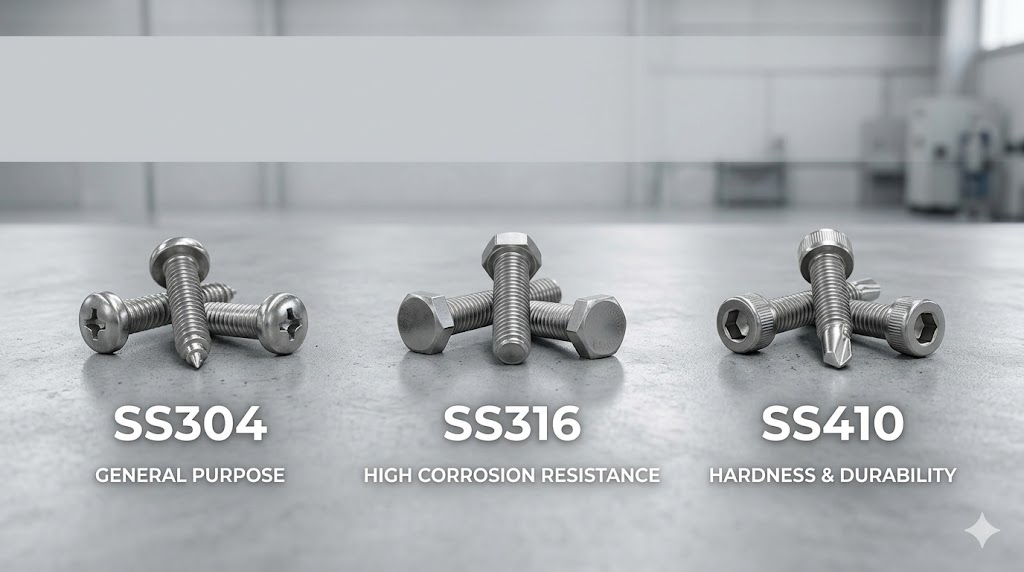
Choosing the wrong stainless steel grade for your fasteners can lead to premature corrosion, structural failure, and costly rework. Yet it remains one of the most common — and expensive — mistakes in construction and industrial projects worldwide.With over 30 years of manufacturing experience in stainless steel fasteners, we have seen firsthand how material selection impacts project outcomes. This guide breaks down the three most widely used stainless steel grades in the fastener industry — SS304, SS316, and SS410.
Table of Contents
Understanding the Three Key Stainless Steel Grades
Head-to-Head Performance Comparison
1. Understanding the Three Key Stainless Steel Grades
Not all stainless steel is created equal. The corrosion resistance, strength, and cost of a fastener depend primarily on its chemical composition and microstructure.
SS304 (AISI 304 / 18-8 Stainless Steel)
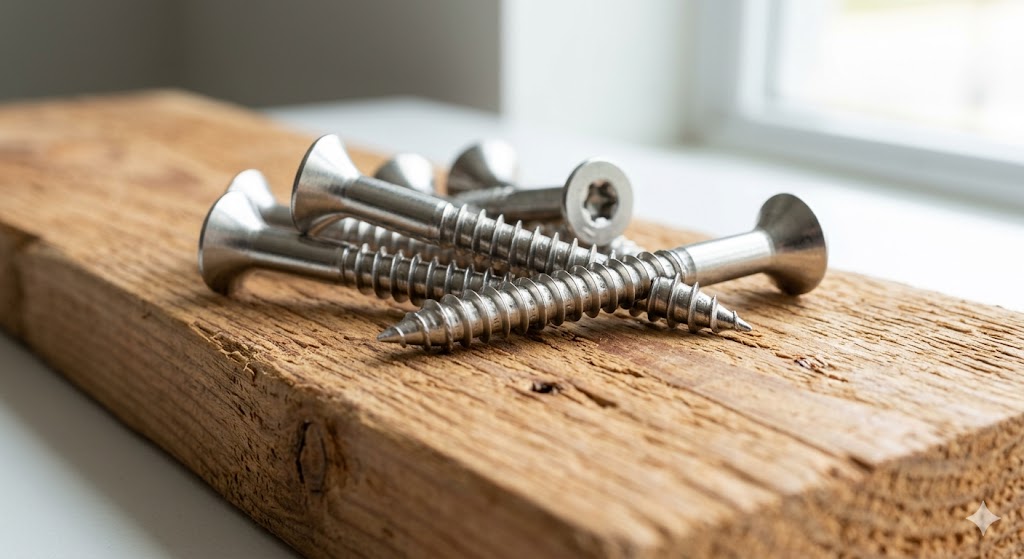
SS304 is the workhorse of the stainless steel fastener industry. Its composition of approximately 18% chromium and 8% nickel provides balanced corrosion resistance, formability and cost.
Good atmospheric corrosion resistance for regular outdoor usage
Tensile strength: 500–700 MPa after cold working
Slightly magnetic after forming, excellent weldability
Suitable for general construction, decking, fencing, timber screws and multi-purpose screws. Limitation: Vulnerable to pitting corrosion in high-chloride coastal areas within 1–2 km from seawater.
SS316 (AISI 316 / Marine-Grade Stainless Steel)
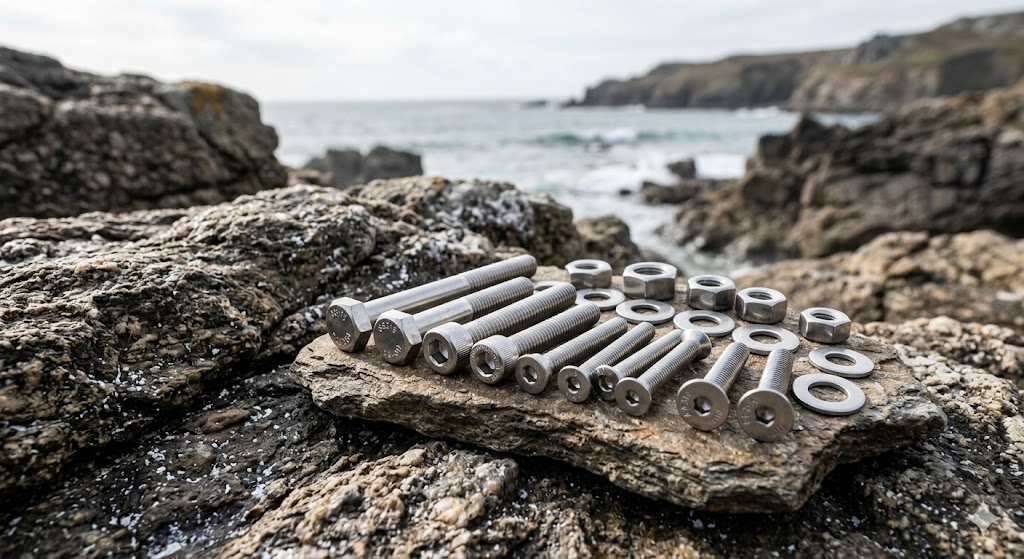
Based on 304 formula with extra 2~3% molybdenum, greatly improving anti-pitting corrosion in salt environment, known as marine grade stainless steel.
Outstanding resistance to saltwater, acid and chemical erosion
Tensile strength: 500–700 MPa
Non-magnetic under annealed state, standard option for coastal, marine, chemical engineering fasteners.
SS410 (AISI 410 / Martensitic Stainless Steel)
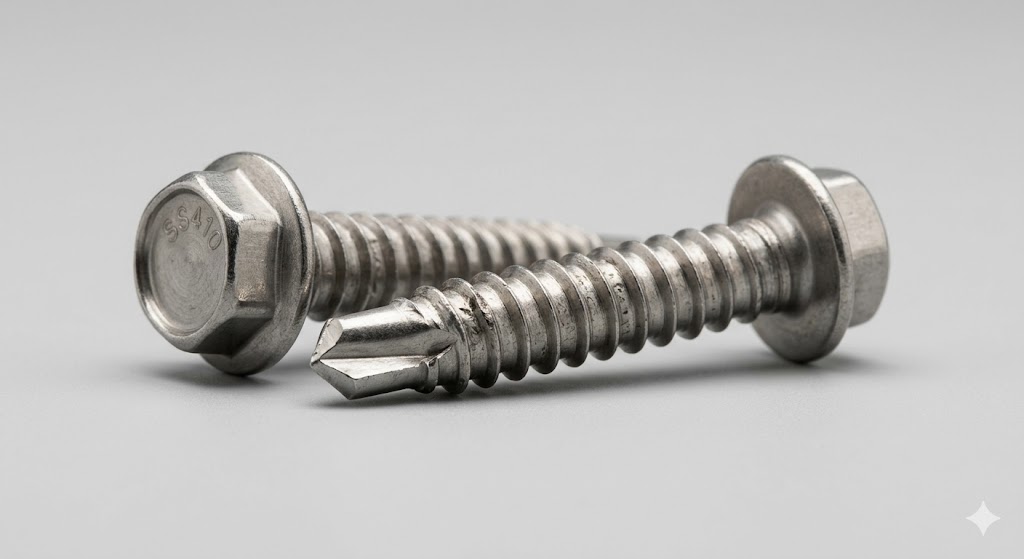
Low-nickel martensitic stainless steel, high hardness via heat treatment.
Hardness HRC35–45, outstanding self-drilling performance
Wide range tensile strength: 480~1000MPa
Fully magnetic, inferior anti-corrosion vs 304/316
Mainly used for self-drilling screws; surface coating or bi-metal structure required for outdoor anti-rust demand.
2. Head-to-Head Comparison Table
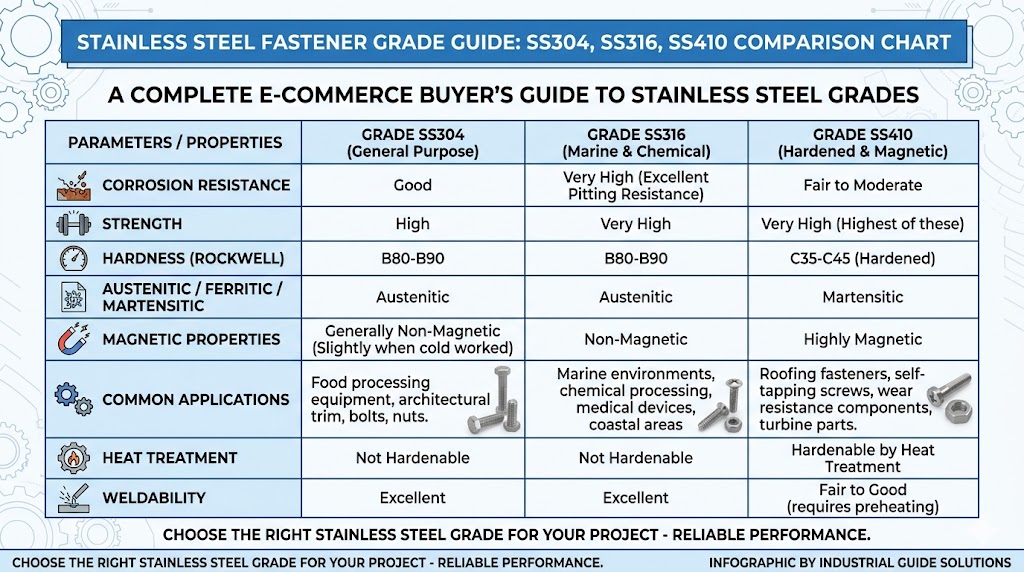
|Property|SS304|SS316|SS410|
| ---- | ---- | ---- | ---- |
|Metal Type|Austenitic|Austenitic|Martensitic|
|Chromium|18–20%|16–18%|11.5–13.5%|
|Nickel|8–10.5%|10–14%|≤ 0.75%| |Molybdenum|—|2–3%|—|
|Corrosion Resistance|★★★★☆|★★★★★|★★☆☆☆|
|Hardness & Drillability|★★☆☆☆|★★☆☆☆|★★★★★|
|Relative Cost|Baseline|+20–30%|-5~-10%|
|Typical Usage|Ordinary outdoor timber & construction|Coastal/marine/chemical project|Coated self-drilling screws|