
Fastener Solutions for Roofing & Cladding Projects
In modern construction, metal roofing and wall cladding systems demand more than just structural framing — they require fasteners engineered to withstand decades of wind uplift, thermal expansion, moisture, and chemical exposure. A poorly chosen roofing screw fastener can lead to leaks, corrosion streaks, panel distortion, and even complete system failure long before the roof reaches its design life. Whether you are specifying fasteners for an industrial warehouse, a cold storage facility, or a coastal residential development, understanding the right fastening solution from day one is the difference between a project that holds and one that haemorrhages maintenance cost.
Types of Roofing Screw Fasteners and Their Applications
Not all screws used in roofing are interchangeable. The distinction between a self-drilling screw and a self-tapping screw is particularly important in roofing applications, because one eliminates a work step while the other requires it.
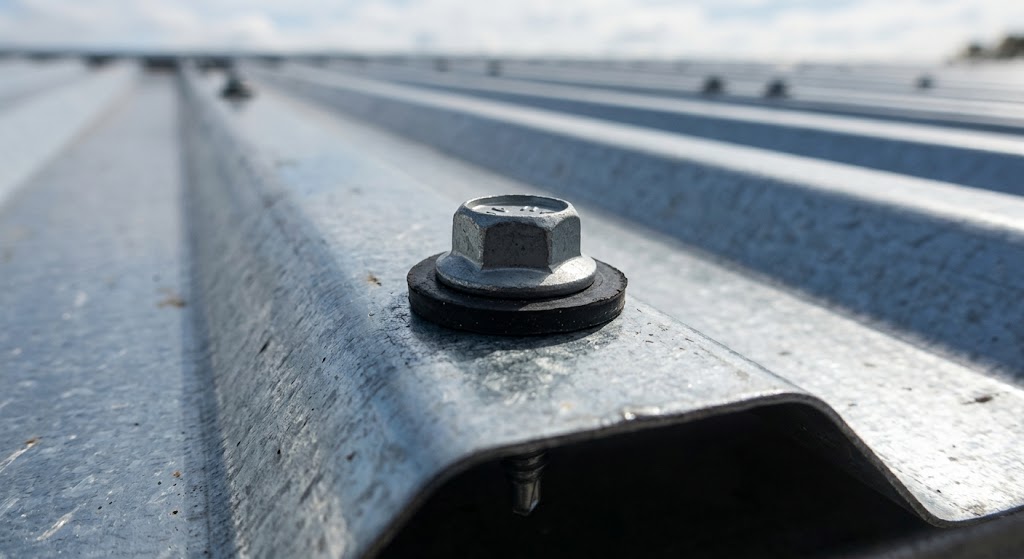
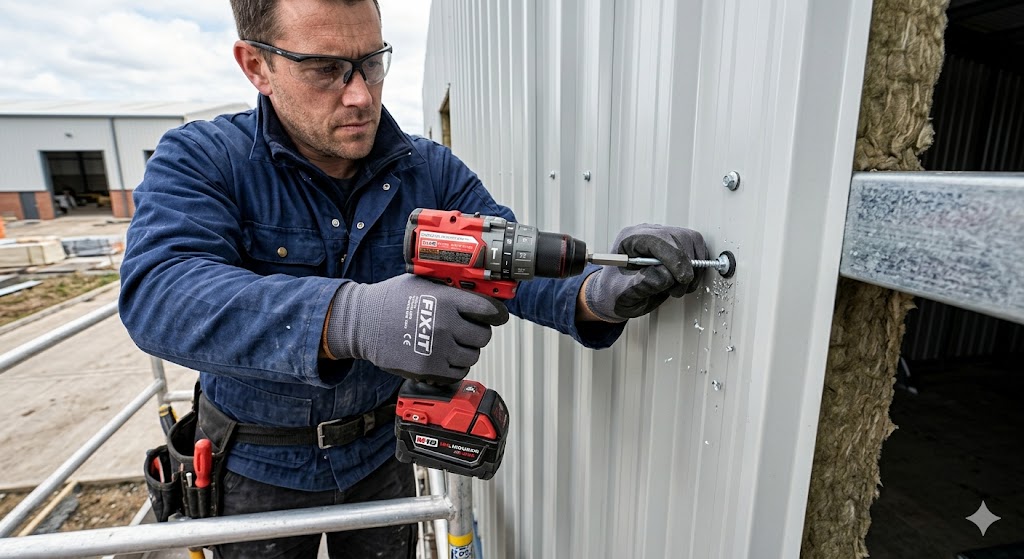
A self-drilling screw features a drill-point tip with a flute design that cuts its own pilot hole as it is driven into the substrate. This means it can pierce through metal roof sheets and into steel purlins in a single operation — no pre-drilling required. For high-volume roofing and cladding installations, this translates directly to labour savings and fewer alignment errors. Common variants include hex washer head self-drilling screws with EPDM bonded washers, which create a watertight seal the moment the washer compresses against the panel surface.
A self-tapping screw, by contrast, has a sharp but non-drilling tip. It forms or cuts threads into a pre-drilled pilot hole. In roofing, self-tapping fasteners are typically used for stitching applications — fastening sheet-to-sheet overlaps where only thin-gauge metal is involved — or for attaching trim, flashing, and ridge caps. Confusing these two fastener types on site is a frequent cause of over-driven screws, stripped holes, and compromised weather seals.
Beyond these, bi-metal self-drilling screws bridge the gap between carbon steel bodies and hardened drill points, allowing one screw to penetrate heavy structural steel while the body provides the ductility needed for long-term wind-load cycling. Stainless steel variants — typically A2 (304) or A4 (316) grade — are specified for coastal, chemical, and food-processing environments where corrosion resistance is non-negotiable.
Key Technical Considerations for Fastener Selection
Choosing the right roofing screw fastener goes far beyond thread diameter. Three factors consistently determine whether a fastening system succeeds or fails in the field.
Material compatibility is the first checkpoint. Fastener bodies, washers, and roof sheet materials form a galvanic cell when dissimilar metals meet moisture. A carbon steel screw driving into aluminium cladding without proper coating will corrode the aluminium panel. The rule of thumb: match the fastener coating system to the panel material — zinc-plated and organic-coated screws for steel sheets, and austenitic stainless screws for aluminium or copper panels.
Corrosion resistance ratings matter far more than they appear. A standard zinc-plated screw tested to 72 hours in salt spray (ASTM B117) belongs nowhere near a coastal installation. For projects within 5 km of saltwater, fasteners should carry a minimum of 1,000-hour salt spray ratings. For chemical plants or geothermal vents, A4 (316) stainless or specialised coatings such as Geomet or Magni become mandatory.
Pull-out and shear strength must be verified against the project's wind-uplift calculations. A fastener that threads cleanly but pulls out under design wind load is a liability. Always reference the screw supplier's technical datasheet for pull-out values in the target substrate gauge, and cross-check against the panel manufacturer's approved fastener list.
Summary
The success of any metal roofing or cladding project begins and ends with the fasteners holding it together. From self-drilling screws with EPDM sealing washers for primary panel attachment, to self-tapping trim screws for finishing details, every roofing screw fastener in the assembly must be specified with material, environment, and structural demand in mind. Getting this right eliminates call-backs, extends roof service life, and protects the building envelope — one correctly driven screw at a time.
Looking for a reliable fastener supply partner? We are a specialist exporter of DIN, ISO, and IFI-standard fasteners — including self-drilling roofing screws, self-tapping sheet metal screws, hex bolts, and custom-engineered fastening solutions. With 20 years of industry experience serving wholesale buyers, importers, and contractors across Europe, North America, and Southeast Asia, we supply standard catalogue components and manufacture bespoke fasteners to your exact specifications. Bulk orders, OEM branding, and technical consultation are all part of our daily workflow.
Get in touch today — send us your drawings or specifications, and we will return a competitive quotation within 24 hours.
Contact us at [contact us] or visit [products] to start the conversation.