
Outdoor screws and bolts are exposed to rain, humidity, temperature cycles, and airborne contaminants every day. Without adequate corrosion protection, even a high-strength fastener can lose clamping force, seize, or fail structurally. For engineers, procurement managers, and construction contractors, outdoor screw anti rust treatment is the first step toward specifying hardware that delivers a reliable service life.
How Corrosion Attacks Outdoor Screws and Bolts
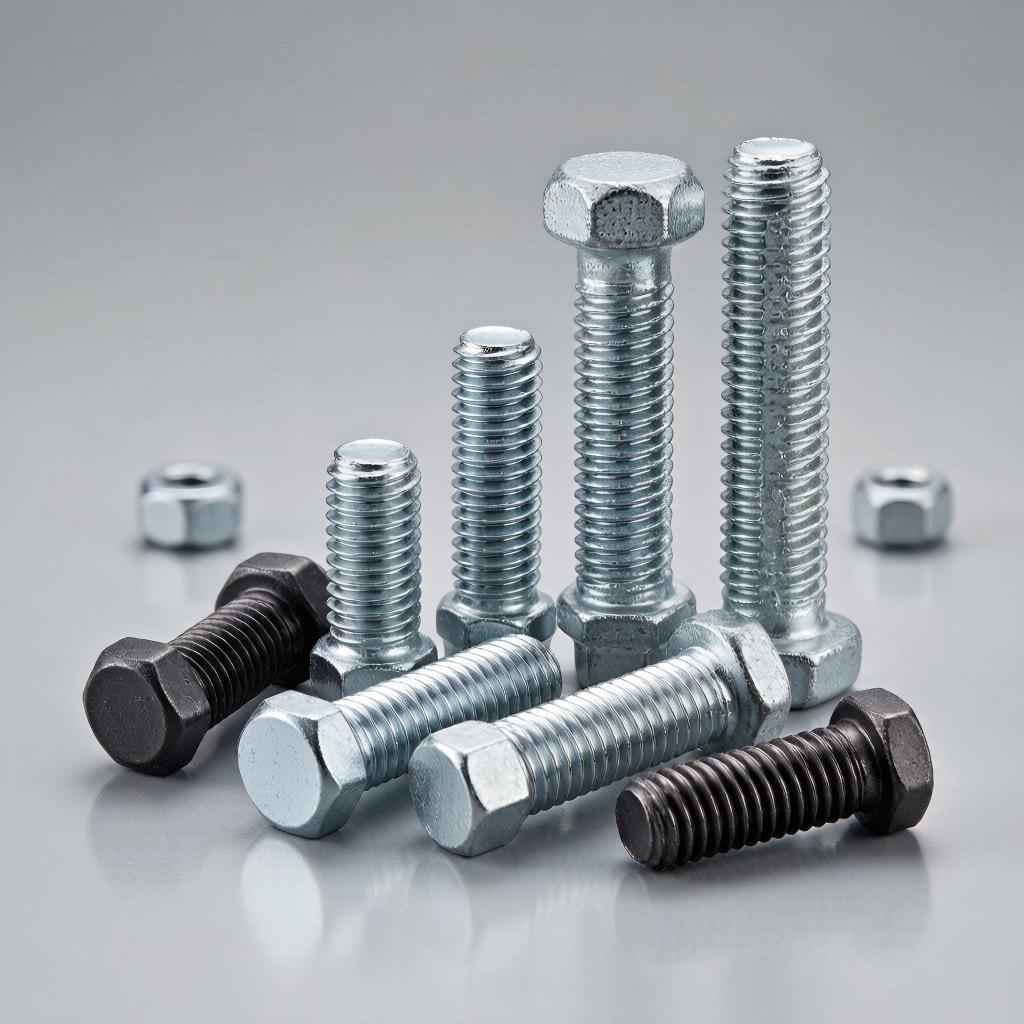
Corrosion is an electrochemical reaction that begins when moisture and oxygen reach an unprotected steel surface. In coastal or industrial environments, chloride ions and sulfur compounds accelerate the process, pitting the screw shank and degrading the threads. Carbon steel fasteners are especially vulnerable, while stainless steel screws offer better baseline resistance but are still not immune to localized pitting or crevice corrosion. Mapping the project environment to ISO 9223 corrosion categories—ranging from C1 (very low) to C5 (very high)—helps buyers choose the right level of outdoor screw anti rust protection from the start.
Common Anti-Rust Treatments for Outdoor Fasteners
Several surface treatments are widely used to extend the life of outdoor screws and bolts. When specifying corrosion-resistant coatings, engineers compare thickness, adhesion, and environmental tolerance:
Hot-dip galvanizing immerses the fastener in molten zinc, creating a thick, sacrificial zinc-iron alloy layer. It is the preferred choice for heavy structural bolts and large screws in bridges, towers, and outdoor frameworks where 20 to 50 years of protection are expected.
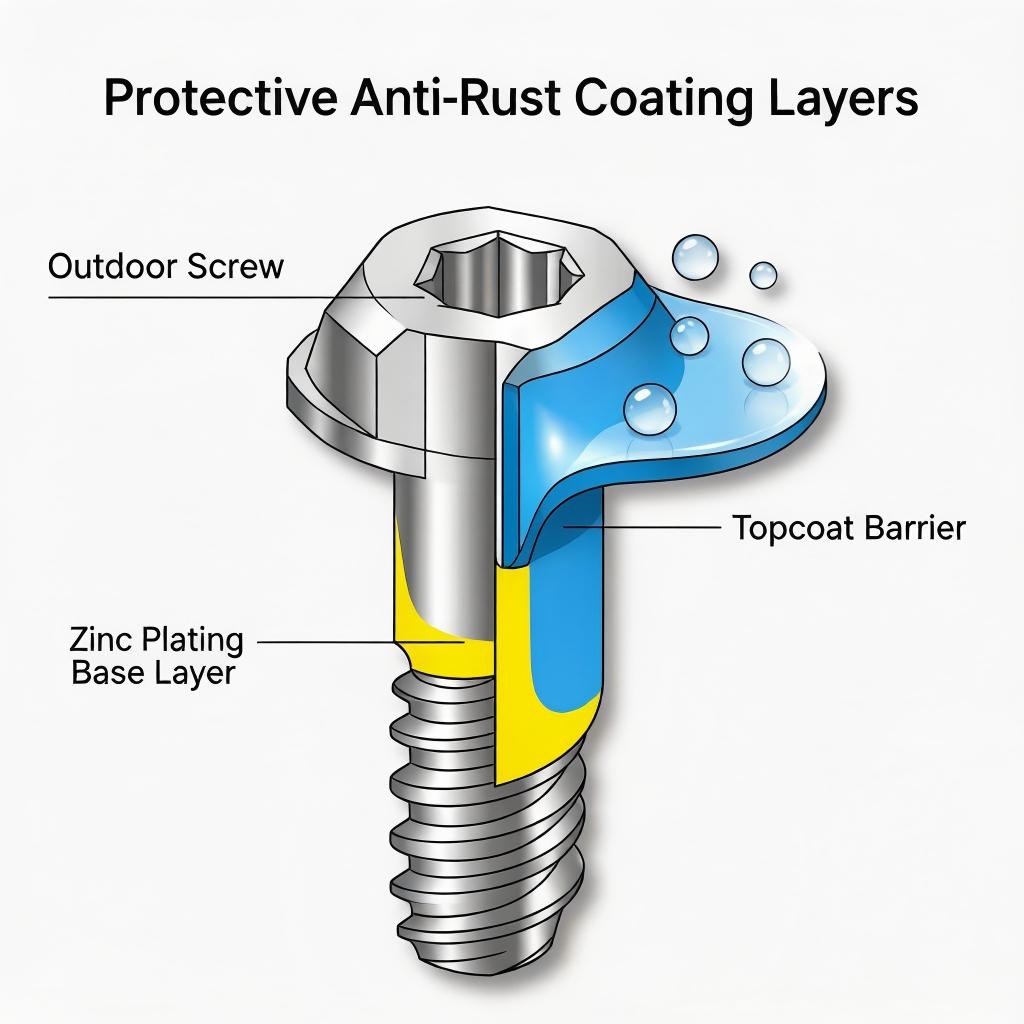
Electrolytic or mechanical zinc plating applies a thinner zinc coating with a brighter, more uniform finish. It is suitable for smaller precision screws, light-gauge metal fasteners, and assemblies where clean thread fit matters.
Dacromet and Geomet coatings are chromium-free finishes that provide excellent salt-spray resistance, often specified for automotive, solar, and marine outdoor fasteners.
Organic topcoats such as epoxy or polyester powder can be applied over zinc layers to add UV resistance, color coding, and an extra moisture barrier.
Self-drilling screws integrate a drill point that eliminates pre-drilling in metal substrates, while self-tapping screws form threads by displacing material in a pre-drilled hole. Both screw types can be supplied with the same anti-rust coatings, but coating thickness must be controlled to preserve point geometry and thread engagement.
In addition to the coating itself, buyers should review salt-spray test reports, adhesion ratings, and thread tolerances. A coating that is too thick can alter torque-tension relationships and lead to clamping failures, while a coating that is too thin may not survive the first wet season.
Selecting the Best Outdoor Screw Anti-Rust Treatment
The right choice balances exposure severity, design life, and total cost. A light-gauge framing screw in a dry inland climate may only need standard zinc plating, while a solar panel mounting screw in a coastal region should combine hot-dip galvanizing with a Dacromet or powder topcoat. Engineers should also verify that thick coatings do not interfere with thread engagement, head recess fit, or specified torque settings. Testing to ASTM B117 or ISO 9227 salt-spray standards can quantify the durability of any outdoor screw anti rust solution before large-scale procurement.
Galvanic corrosion is another consideration when mixing materials. Pairing a coated carbon steel screw with an aluminum or stainless steel bracket can create a corrosion cell if the coating is damaged or incompatible. Selecting an appropriate barrier layer or isolating dissimilar metals helps avoid unexpected failures.
Summary
Reliable outdoor performance depends on more than base material strength. By selecting the correct outdoor screw anti rust treatment and validating it against the expected environment, buyers can reduce maintenance cycles, avoid premature failures, and protect the structural integrity of their assemblies.
Wholesale & Customized Fastener Supply
At EC FASTENER, we supply wholesale and custom outdoor screws, bolts, and fastening systems with a full range of anti-rust treatments, including hot-dip galvanizing, zinc plating, and Dacromet coatings. Our engineering team can match the finish to your project specification and provide material traceability, salt-spray reports, and ISO-compliant testing.
Ready to source corrosion-resistant fasteners for your next project? Contact us today for a quote or sample batch.