
Wood Screw vs Sheet Metal Screw: Key Differences
Choosing the wrong screw type between wood and sheet metal applications leads to poor holding power, substrate damage, and eventual joint failure. The **wood screw vs sheet metal screw** distinction is not merely a labeling convention — these two fastener categories differ fundamentally in thread geometry, tip design, head style, and material specification. Understanding these differences allows wholesale buyers, engineers, and construction professionals to specify the correct fastener with confidence.
Thread Geometry and Tip Design
The most significant difference in any **wood screw vs sheet metal screw** comparison lies in the thread profile.
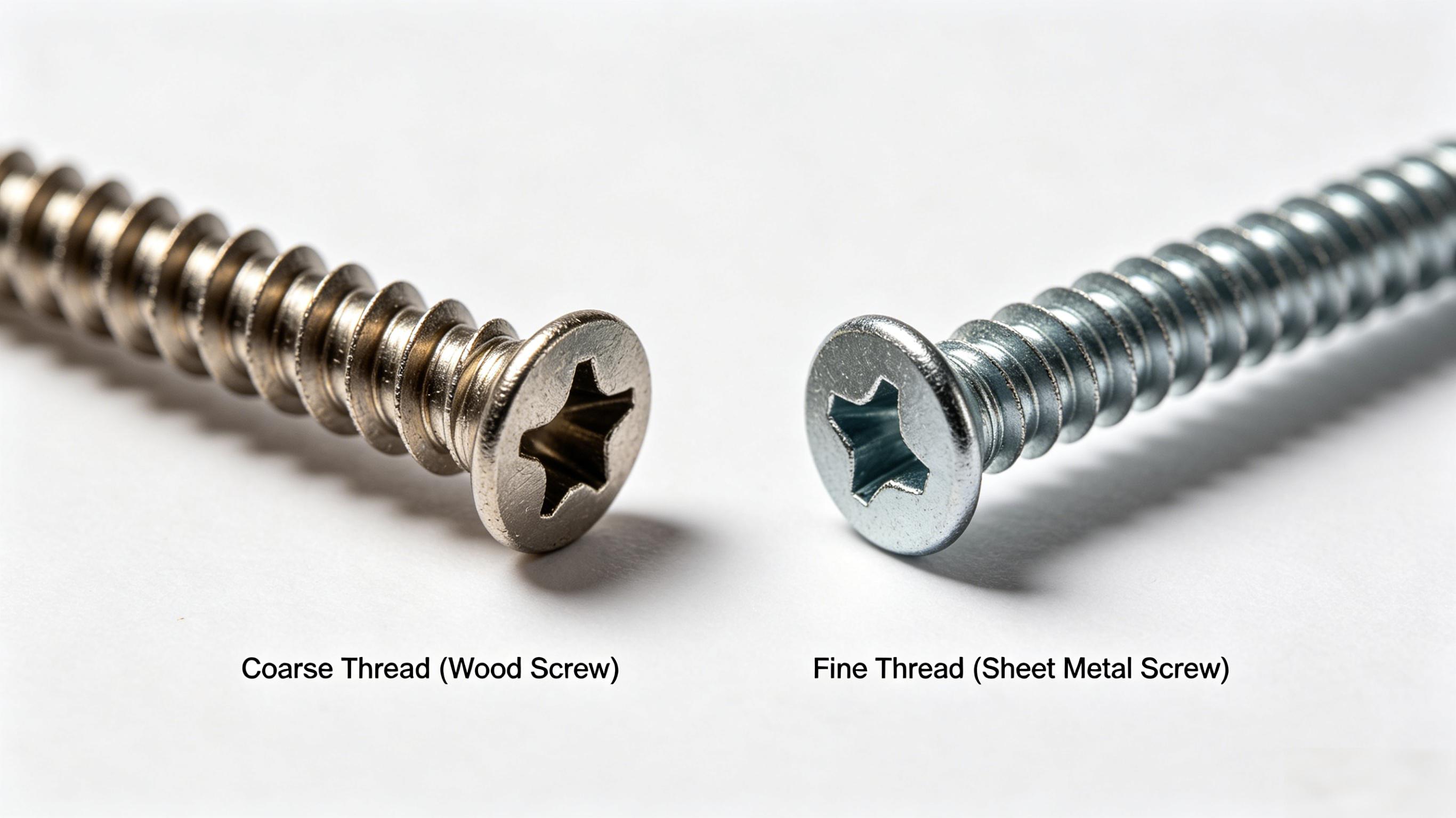
**Wood screws** feature a coarse thread with a wide pitch — typically 10–14 threads per inch for common sizes. The deep thread profile compresses and grips the fibrous, porous structure of timber. A sharply tapered tip wedges into wood fibers, allowing penetration without a pilot hole in softwood. The unthreaded shank near the head acts as a clearance zone, letting two wood pieces draw together tightly as the thread engages deeper material.
**Sheet metal screws** use a finer thread with a narrower pitch — often 20–32 threads per inch. This dense thread pattern grips thin, dense substrates such as sheet steel, aluminum panels, or plastic housings by cutting or forming a mating thread path as the screw drives in. It is important to distinguish: sheet metal screws are **self-tapping screws** that create their own internal thread in a pre-formed hole, whereas **self-drilling screws** carry an integrated drill-bit point that pierces the metal before the thread engages. Standard sheet metal screws require a punched or drilled hole in material above approximately 0.5 mm gauge.
In the **wood screw vs sheet metal screw** decision, thread pitch is the decisive factor: coarse threads for porous substrates, fine threads for thin, dense panels.
Head Styles and Drive Configurations
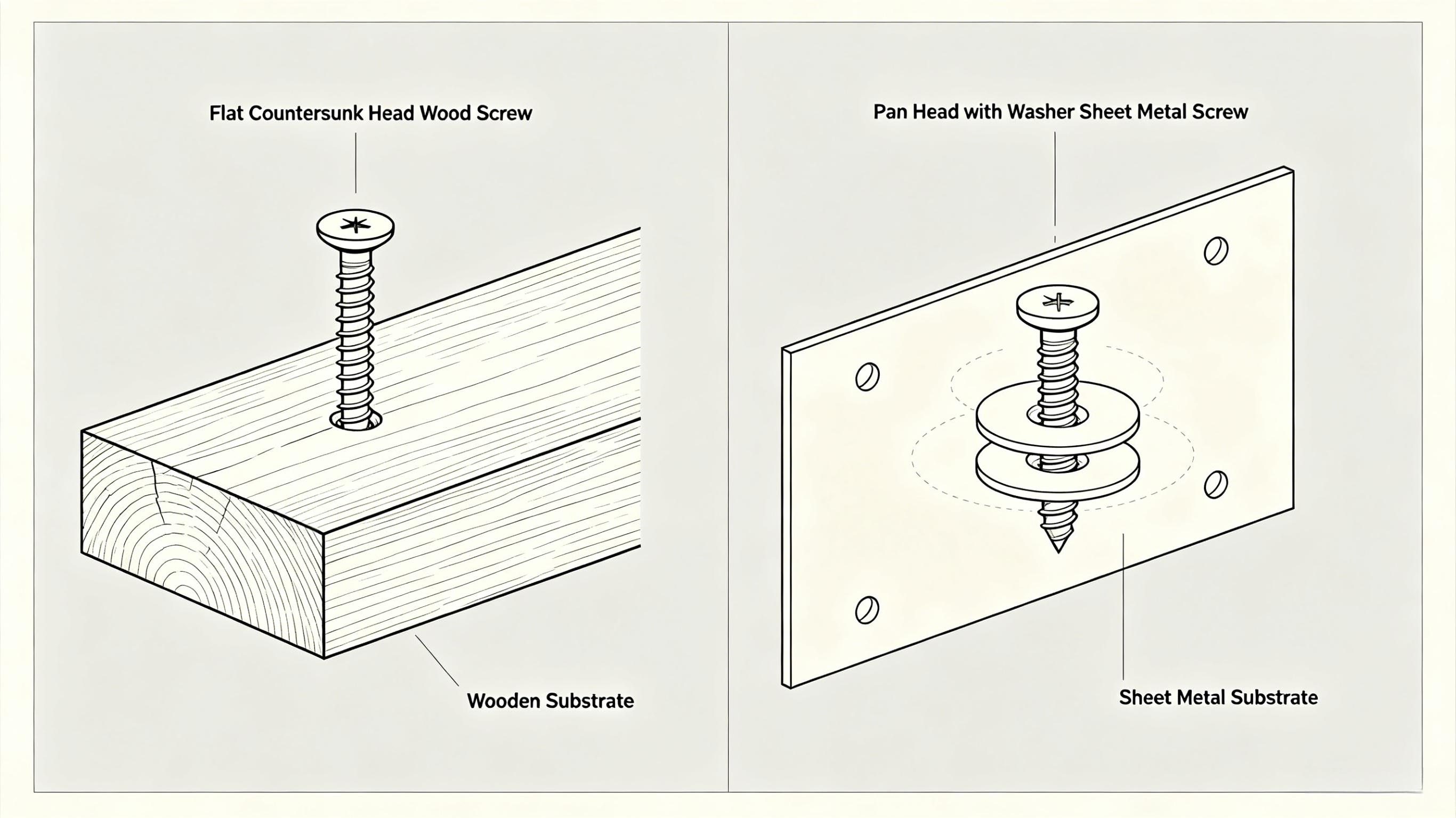
Head design follows substrate requirements. Wood screws commonly use flat (countersunk) heads that sit flush with the timber surface — critical for cabinetry, trim, and furniture assembly where surface continuity matters. Round and pan head styles serve applications where a raised profile is preferred. Traditional slotted drives have largely been replaced by Phillips, square (Robertson), and Torx configurations that reduce cam-out during installation.
Sheet metal screws typically feature pan heads or hex washer heads with bonded rubber washers. Pan heads spread clamping force across thin metal surfaces to prevent pull-through, while hex washer heads deliver weather-sealed joints for roofing and exterior cladding. When evaluating **wood screw vs sheet metal screw** head options, the key question is whether the application demands flush seating in thick material or broad load distribution on thin panels.
Material Grades and Corrosion Resistance
Wood screws are most commonly produced from carbon steel with zinc plating for interior use. For outdoor and moisture-exposed timber, 304 stainless steel provides reliable corrosion resistance. Since wood naturally retains moisture, even interior fasteners benefit from electro-galvanized coatings.
Sheet metal screws face harsher service conditions. In roofing, HVAC ducting, and exterior cladding, exposure to rain, UV, and temperature cycling demands robust protection. Grade 410 stainless steel (hardened for self-tapping performance) and 304 stainless are standard choices. Hot-dip galvanized sheet metal screws per ASTM A153 serve heavy structural steel connections. The material selection in a **wood screw vs sheet metal screw** procurement decision must account for both the substrate environment and the expected service life of the assembly.
The **wood screw vs sheet metal screw** distinction centers on substrate compatibility: coarse-thread wood screws anchor into porous timber with tapered tips and flush heads, while fine-thread sheet metal screws lock into thin metal panels with self-tapping threads and load-spreading heads. Matching the screw type to the material prevents installation failures, reduces substrate damage, and ensures long-term joint integrity.
As a specialized fastener manufacturer and exporter, we supply both wood screws and sheet metal screws in standard and custom specifications — covering DIN, IFI, and ISO standards with options for zinc plating, hot-dip galvanizing, and 304/316 stainless steel. Our wholesale service supports flexible packaging, private labeling, and technical specification guidance for global buyers.
**Contact us today for a wholesale quotation or custom specification inquiry — our engineering team will help you select the right screw for every application.**