0513-81181360 info@ecindustry.com

EC International (Nantong) Co.,LTD.
  • Home
  • Products
    • Standard Industrial Fasteners
    • Deck Screws
    • Multi-Purpose Screws
    • Weatherboard Screws
    • Timber Screws
    • Bi-Metal Self-Drilling Screws
    • 410 Stainless Steel Screws
    • RXB Coating Corrosion Resistant Fasteners
    • Extra Long Fasteners
    • Large Diameter Fasteners
    • Solar Mounting Fasteners
    • Petrochemical Fasteners
  • Specialty
    • Heads and Threads
    • Customized Packaging
  • Catalogues
  • About Us
  • Quality
    • Quality Certificates
    • CE Certification
    • Quality in Action
  • News
    • Updates
    • Articles
    • Industry-news
  • F.A.Q
  • Contact Us

Articles

Home News Articles Salt Spray Test Standard for Stainless S...
Stainless steel fasteners, including screws, bolts, nuts and washers, are essential connecting components widely used in marine systems, automotive manufacturing, outdoor construction and industrial machinery. Corrosion resistance is a critical performance metric that directly governs the service lifespan and operational reliability of fastener products. As a mainstream accelerated aging test method, the salt spray test effectively simulates high-salt and high-humidity corrosive environments, delivering accurate and repeatable evaluation of the anti-corrosion performance and environmental adaptability of stainless steel fasteners. This article comprehensively elaborates on globally recognized salt spray test standards, core technical parameters, standardized operating procedures and professional qualification criteria, offering authoritative technical references for factory quality inspection, product certification and customer project verification.
1.jpg

1. Mainstream Salt Spray Test Standards for Stainless Steel Fasteners
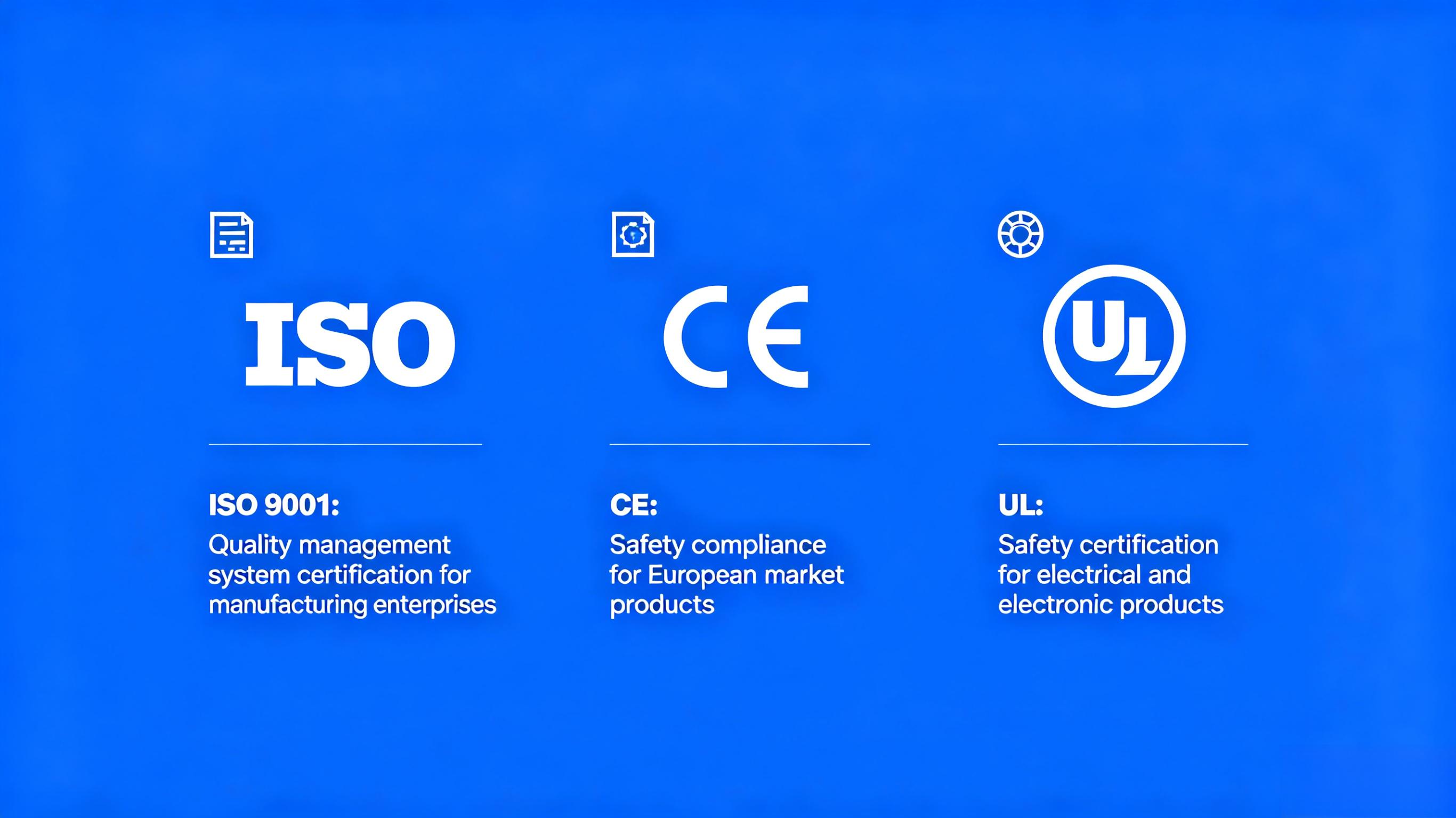
Global salt spray testing for stainless steel fasteners primarily follows three authoritative standard systems, covering international universal specifications, North American industrial norms and Chinese national standards. Each standard corresponds to distinct market access requirements and application scenarios, serving as the core basis for product quality verification across global markets.
2.jpg

1.1 ISO 9227: Global Universal Standard

ISO 9227 is the most authoritative and widely adopted international standard for artificial atmosphere corrosion testing. It applies to all types of stainless steel fasteners and surface-modified fastener products. The standard defines three mainstream testing modes: NSS Neutral Salt Spray, AASS Acetic Acid Salt Spray and CASS Copper-Accelerated Acetic Acid Salt Spray. Among them, the NSS neutral salt spray test is the standard conventional test for ordinary stainless steel screws, bolts and matching fasteners, suitable for most general industrial application scenarios.

1.2 ASTM B117: American Industrial Standard

ASTM B117 is the classic neutral salt spray test standard prevailing in the North American market. It is extensively applied in quality testing of stainless steel fasteners for automotive, aerospace, outdoor engineering and export-oriented projects. The standard imposes strict and unified requirements on test equipment, saline solution concentration, constant temperature, spray settlement rate and other core parameters, serving as a mandatory certification benchmark for fastener products entering North American commercial and industrial markets.

1.3 GB/T 10125-2021: Chinese National Standard

GB/T 10125-2021 is the authoritative national standard for artificial salt spray corrosion testing of metal products in China, which is highly consistent with the international ISO 9227 standard system. It is applicable to factory routine inspection, batch sampling and quality supervision of domestic stainless steel fasteners, covering complete technical specifications for neutral salt spray tests and fully aligning with global mainstream testing standards.

2. Core Test Parameters of Conventional Stainless Steel Fasteners
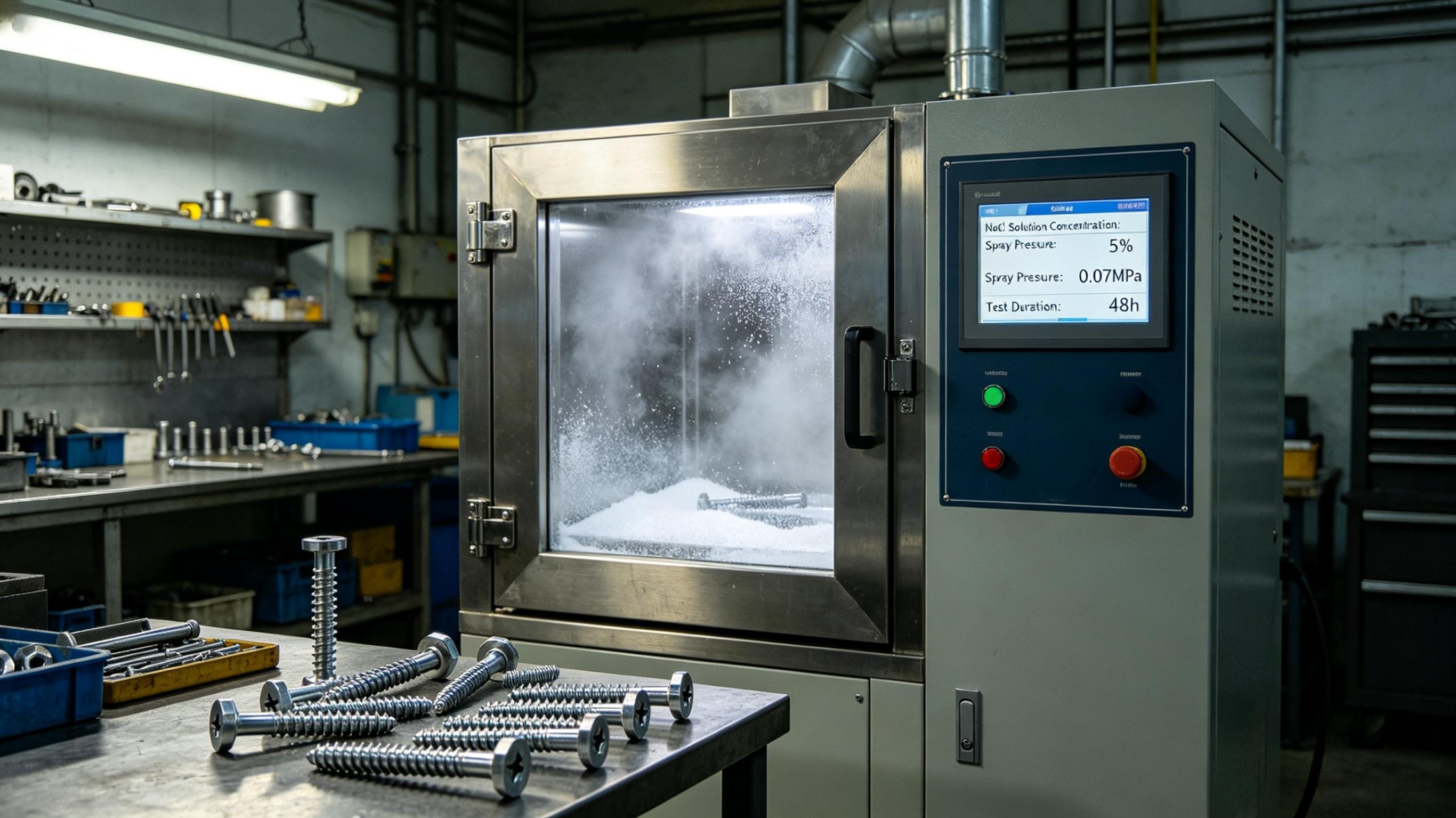
Unlike carbon steel or electroplated fasteners, stainless steel fasteners achieve excellent anti-corrosion performance relying on a dense passive film formed on their metal surface. The industry uniformly adopts the NSS neutral salt spray test as the conventional detection method for stainless steel fasteners. Unified core test parameters ensure high consistency, accuracy and comparability of test results for different batches and grades of products.
4.jpg
  • Salt solution: 5% sodium chloride (NaCl) pure water solution, no impurity additives

  • Test temperature: Constant temperature 35℃, stable temperature control error ≤±1℃

  • Solution pH value: Maintain 6.5–7.2, neutral environment simulation

  • Salt spray settlement rate: 1–2 mL/(80cm²·h), ensuring uniform atomization

  • Conventional test duration: 24h / 48h / 96h / 120h, customized according to stainless steel grades and application scenarios

Note: Test duration varies by stainless steel grade and application environment. 201/202 stainless steel fasteners typically undergo 24–48 hours of salt spray testing; 304 stainless steel fasteners adopt 48–96 hours of standard testing; while high-grade 316/316L marine stainless steel fasteners require a test cycle of 120 hours or more to adapt to extreme corrosive conditions in coastal and marine environments.

3. Standard Salt Spray Test Procedure for Stainless Steel Screws
Standardized operating procedures are the premise of valid and repeatable salt spray test results. Non-standard operation may lead to data deviation and misjudgment of product anti-corrosion performance. Below is the standardized full-process test procedure for stainless steel screw and fastener salt spray testing.
5.jpg

3.1 Sample Preprocessing

Select qualified finished stainless steel fastener samples, remove surface oil stains, dust and residual impurities using pure water and alcohol. Avoid scratching or damaging the surface passive film during cleaning. Place the treated samples in a dry, dust-free environment for natural drying and standby.

3.2 Sample Placement

Place the dried fastener samples inside the salt spray test chamber in accordance with standard requirements. Ensure no contact between samples or between samples and the chamber inner wall, so that the atomized salt spray can evenly cover the entire surface of each sample to form a uniform corrosive test environment.

3.3 Constant Test Operation

Debug the test equipment to stabilize the saline solution concentration, chamber temperature and spray settlement rate within the standard range, then start continuous timing and atomization. Frequent opening of the chamber door is prohibited during the test to prevent fluctuations in internal temperature and humidity that may affect test accuracy.

3.4 Post-test Observation and Recording

Once the preset test duration is completed, take out the samples, clean the surface gently with pure water and dry them naturally. Inspect and record surface conditions including rust spots, pitting corrosion, passive film damage and oxidation defects for subsequent performance judgment.

4. Qualification Judgment Standard for Test Results

The core evaluation criterion for stainless steel fastener salt spray tests is the integrity of the surface passive film and metal matrix after corrosion exposure. Combined with global industry standards, the unified qualification judgment rules are defined as follows:
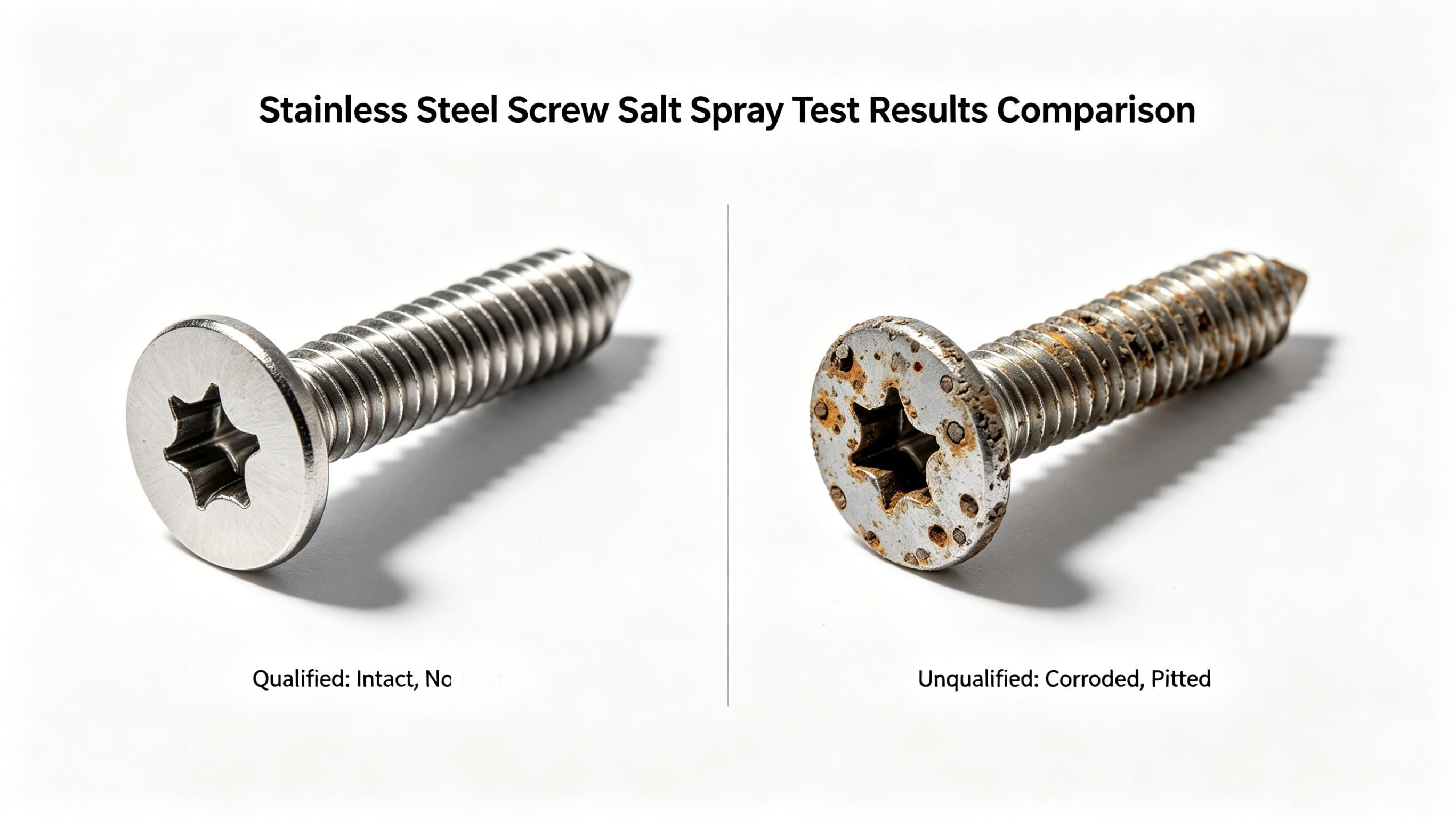
[Image 5: Result Comparison Display Image]
Image Prompt: Comparison chart of qualified and unqualified stainless steel screw salt spray test results, left side: intact non-rusting sample, right side: corroded and pitted sample, clear contrast, laboratory white background, intuitive display
  • Qualified Standard: After completing the specified salt spray test cycle, the fastener surface remains intact without white rust, red rust, pitting corrosion or passive film cracking, and no damage occurs to the metal base material.

  • Unqualified Standard: The sample surface shows visible red rust spots, pitting corrosion, local passive film failure or large-area oxidation corrosion, indicating that the product fails to meet the standard anti-corrosion requirements.

For high-end application scenarios such as marine engineering equipment, new energy facilities and outdoor precision machinery, additional evaluation indicators including corrosion area ratio and corrosion grade will be adopted to verify the long-term anti-corrosion stability of fasteners in harsh environments.

5. Why Standardized Salt Spray Test Matters?
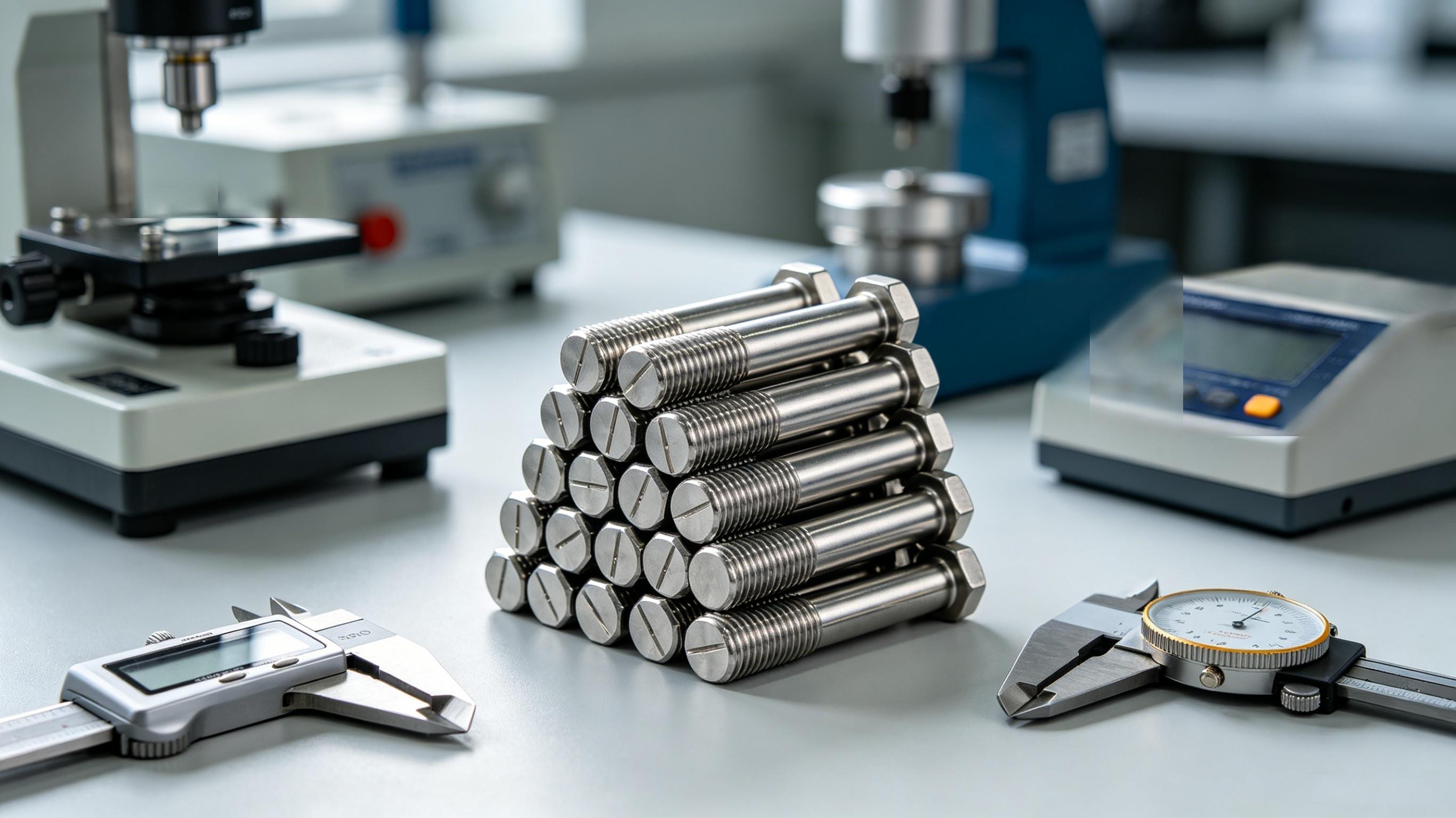
Stainless steel fasteners undertake critical connection and fixing functions in various equipment and engineering projects. Corrosion failure of fasteners will directly cause equipment loosening, structural instability and even potential safety hazards. Standardized salt spray testing is an essential quality control procedure to eliminate defective products with unqualified passive films and unstable anti-corrosion performance, ensuring the long-term reliable operation of end products in high-humidity, high-salt and coastal corrosive environments.
All stainless steel screws, bolts, nuts and customized special fasteners we supply are strictly tested in accordance with ISO 9227, ASTM B117 and GB/T 10125-2021 standards. Complete official test reports and third-party authoritative certification are available to fully meet global customer quality audit and international market access standards.
6.jpg

Summary

ISO 9227, ASTM B117 and GB/T 10125-2021 form the complete standard system for salt spray testing of stainless steel fasteners in the global industry. Scientific parameter configuration, standardized operation procedures and rigorous result judgment are the core guarantees of fastener anti-corrosion quality. Adhering to international standard salt spray testing enables our stainless steel fasteners to adapt to diverse and harsh global application scenarios, maintaining stable and durable anti-corrosion performance throughout the service cycle.

Latest Post

  • SS304 vs SS316 vs SS410 Fastener Materia
    2026-06-04
  • Roofing Screw Fastener Guide for Metal R
    2026-06-11
  • Precision Fasteners for Southeast Asia E
    2026-06-10

Feedback

Contact Us

0513-81181360

info@ecindustry.com

Nantong,Jiangsu,China,226000

Mobile Website

Copyright © 2020-2026 EC International Design All Rights Reserved.

Inquiry Us Now !
Inquiry Us Now !