
Heavy-duty structural screws are widely used in timber framing, steel-to-wood connections, and load-bearing assemblies where through-bolting is impractical. Unlike standard wood screws, structural screws meet building code requirements such as ICC-ES AC233, and their performance depends heavily on correct installation torque. Too little torque leaves the connection loose; too much can strip threads, shear the head, or crush the substrate. Getting the structural screw torque setting right is a precondition for passing field inspections and meeting design load specifications.
Why Torque Control Matters in Structural Fastening
A structural screw transfers load through thread engagement and clamping force. The installation torque directly controls the preload developed in the fastener. In timber structures, insufficient preload causes joint slippage under cyclic wind or seismic loading. In steel-to-wood connections, overtightening crushes wood fibers around the shank, severely reducing withdrawal capacity.
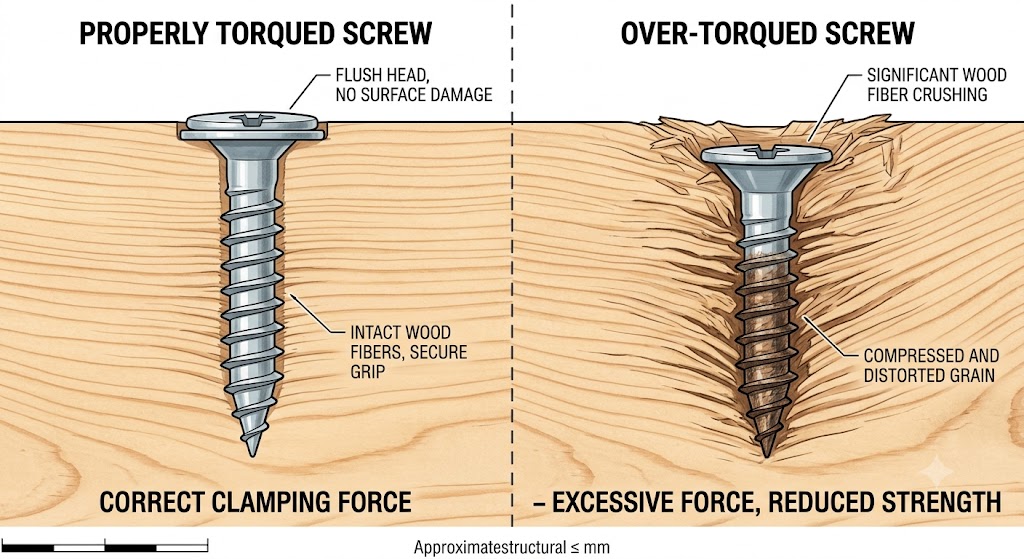
Manufacturers publish torque values based on screw diameter, material grade, and substrate type. For example, a 6 mm carbon steel structural screw in SPF lumber may require 15–20 N·m seating torque, while the same screw in LVL tolerates 22–28 N·m due to higher density. Ignoring substrate-specific values is one of the most frequent causes of joint failure on site.
Field moisture also matters. Published torque values assume dry, room-temperature wood. When driving screws into wet framing lumber, reduce torque by 10–15% to prevent over-embedding the head.
Recommended Torque Ranges by Screw Diameter
The table below provides general guidance for carbon steel structural fasteners with minimum 800 MPa tensile strength, installed into seasoned softwood.
Always consult the manufacturer's datasheet — torque specifications vary between brands even for identical dimensions. For stainless steel structural fasteners, reduce torque by roughly 15–20% compared to carbon steel, as austenitic stainless grades exhibit higher thread friction and lower yield strength.
Best Practices for Accurate Torque Application
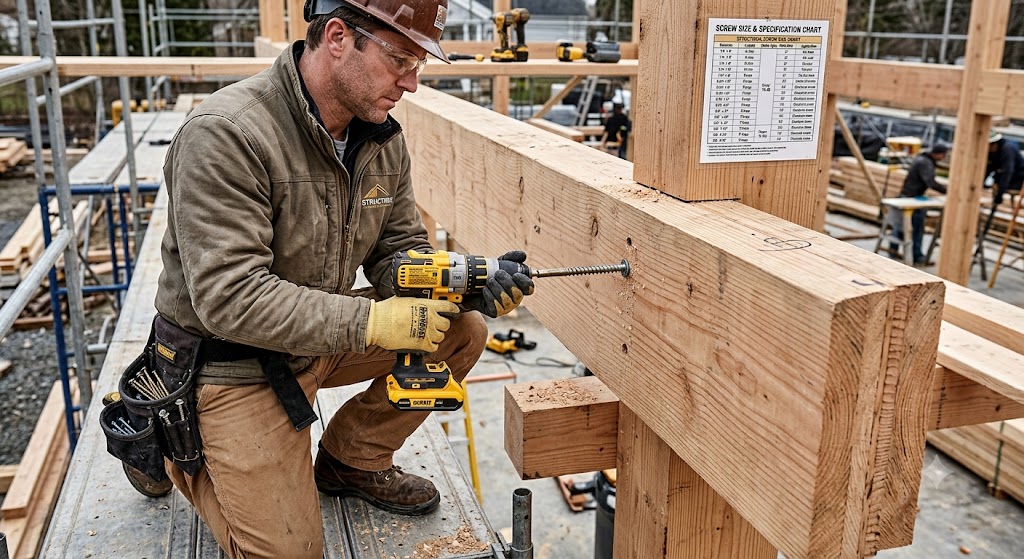
Use a torque-limiting driver. Impact drivers without control can exceed 100 N·m instantly — far beyond what most structural screws tolerate. A torque-limiting attachment or a cordless driver with adjustable clutch delivers repeatable results.
Pilot-drill in hardwoods and engineered lumber. Dense materials such as oak, LVL, and glulam generate higher driving resistance. Without a proper pilot hole — roughly 60–70% of the screw's minor diameter — the driver may stall before seating, leaving the connection under-tightened.
Test a sample batch first. Install five to ten screws into representative substrate offcuts and verify heads seat flush without crushing fibers. Measure torque with a digital torque adapter and compare against specification. This catches inconsistencies in coating friction, moisture content, and tool calibration before full production.
Skip thread lubricants unless specified. Wax or oil alters the torque-tension relationship and risks over-tightening. Only use manufacturer-approved thread treatments.
Summary
Getting the structural screw torque setting correct is what separates a code-compliant connection from a latent failure. Matching torque to screw diameter, substrate, and material grade — and verifying results with sample testing — consistently produces joints that perform as designed.
EC Fastener supplies structural screws manufactured to DIN, IFI, and AS/NZS standards in diameters from 4 mm to 12 mm. Carbon steel and stainless steel options are available with custom lengths, head styles, and coating systems including hot-dip galvanized and Geomet finishes. Low MOQ trial orders and OEM packaging are available for importers and wholesale distributors.
Contact us today for a quote on your structural fastener requirements.